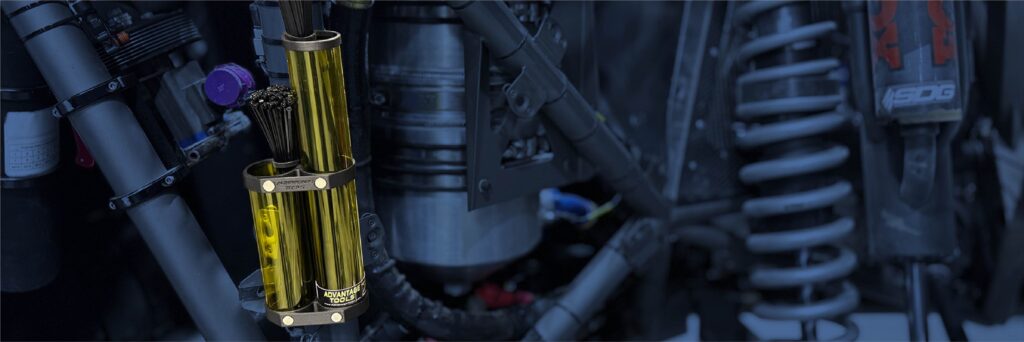
If you’ve ever prepped a trophy truck, you already know—zip ties are everywhere. A good zip tie holder becomes essential fast.
Every race, the truck gets torn down. Drivetrain, cooling systems, plumbing, wiring—everything gets inspected, serviced, and put back together. And every time that happens, hundreds—sometimes thousands—of zip ties get cut and reapplied.
It adds up fast. On a full prep, you’re easily going through around 1,000 zip ties. On a busy day, 200 isn’t unusual.
That’s just part of the job. But how you deal with it makes a big difference.
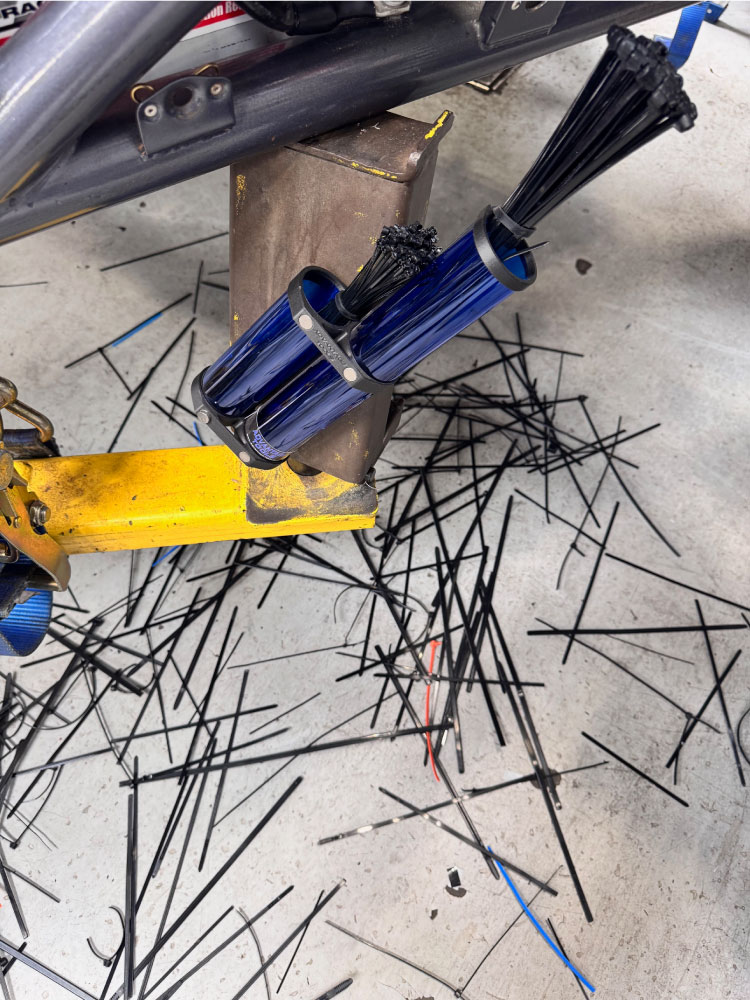
One day of zip ties during prep. It adds up fast.
What It’s Actually Like in the Truck
Most of that work doesn’t happen standing upright at a bench.
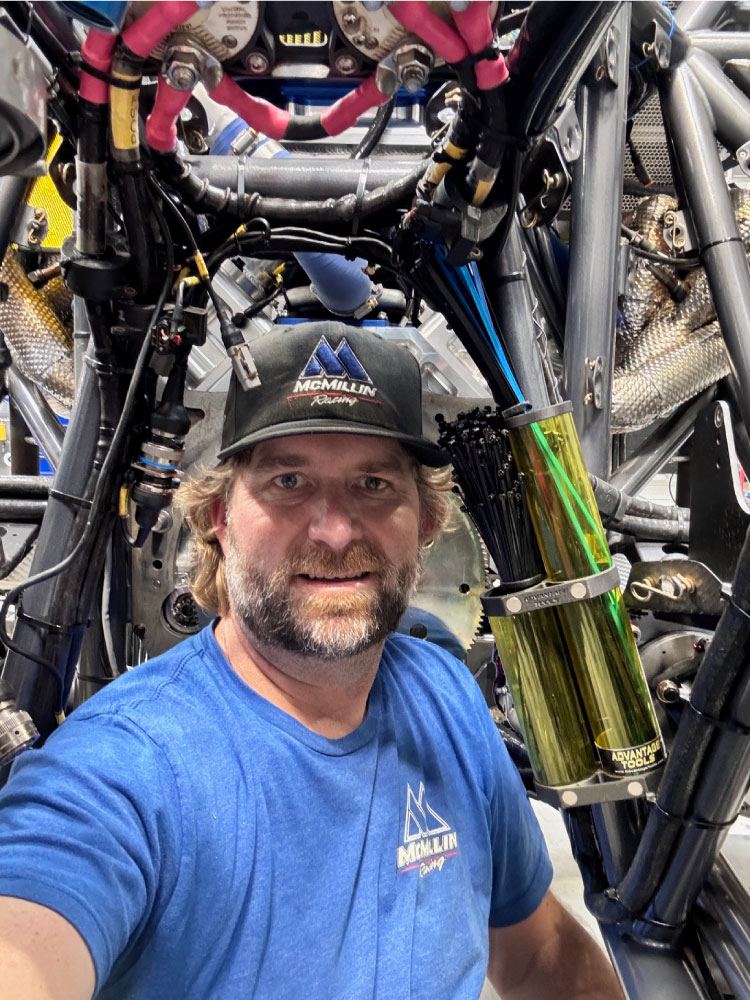
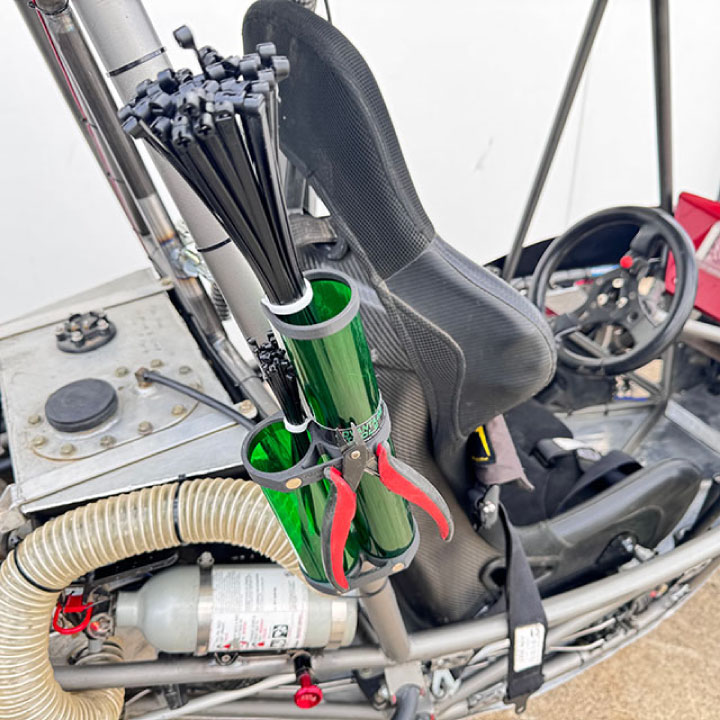
You’re inside the chassis. In the trans tunnel. Reaching over tubes. Twisted around components. Half upside down trying to get to something that was never designed to be easy to access.
And you still need zip ties—constantly.
The old way? Carry a mouth full of them and pull one out at a time.
It works… until it doesn’t.
Zip ties fall. You drop a handful and they explode across the floor. You climb out of the truck, grab more, climb back in, get situated again, and repeat that cycle over and over.
Same thing with flush cuts. You set them down somewhere, lose track of them, and now you’re digging around or climbing out again just to find them.
None of this is complicated—but it’s slow, and it adds up over the course of a long prep.
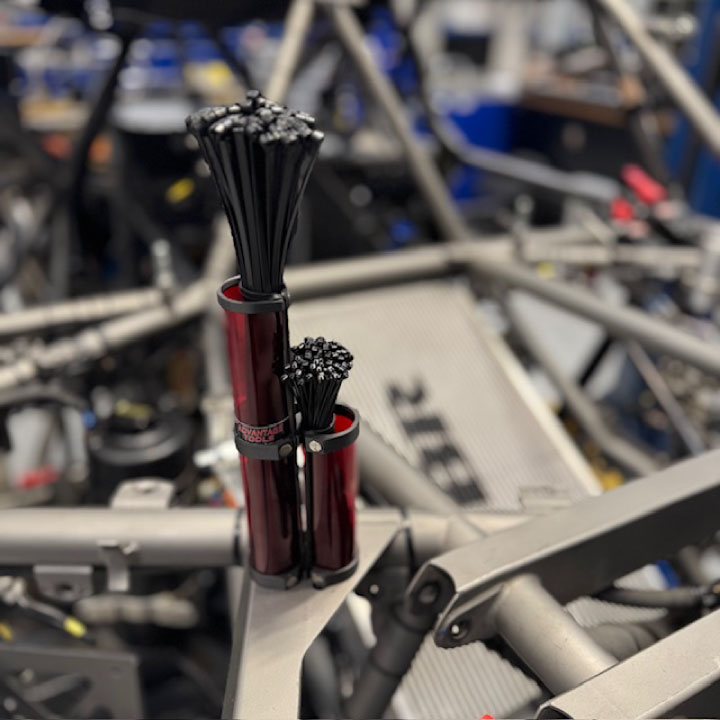
Working inside the chassis, Zip-Tie Holder with me—this is where most of it happens
The Breaking Point: AWD Trucks Changed the Game
When we moved into the Mason AWD trophy trucks, everything stepped up.
More systems. More wiring. More plumbing. More cooling. More complexity across the board.
Which meant one thing—more zip ties.
It added roughly 10 more hours of zip-tying per prep. Same job, just more of it.
That was the point where it stopped being a minor annoyance and turned into something worth fixing.
There had to be a better way to manage it.
What a Real Solution Needed to Be
There are already zip tie holders out there. But noexisting Zip-Tie Holders checked the boxes for how we actually work in a race truck.
The requirements were pretty clear:
Compact and lightweight
Magnetic (so there’s always a mounting point)
Works on tube chassis—not just flat surfaces
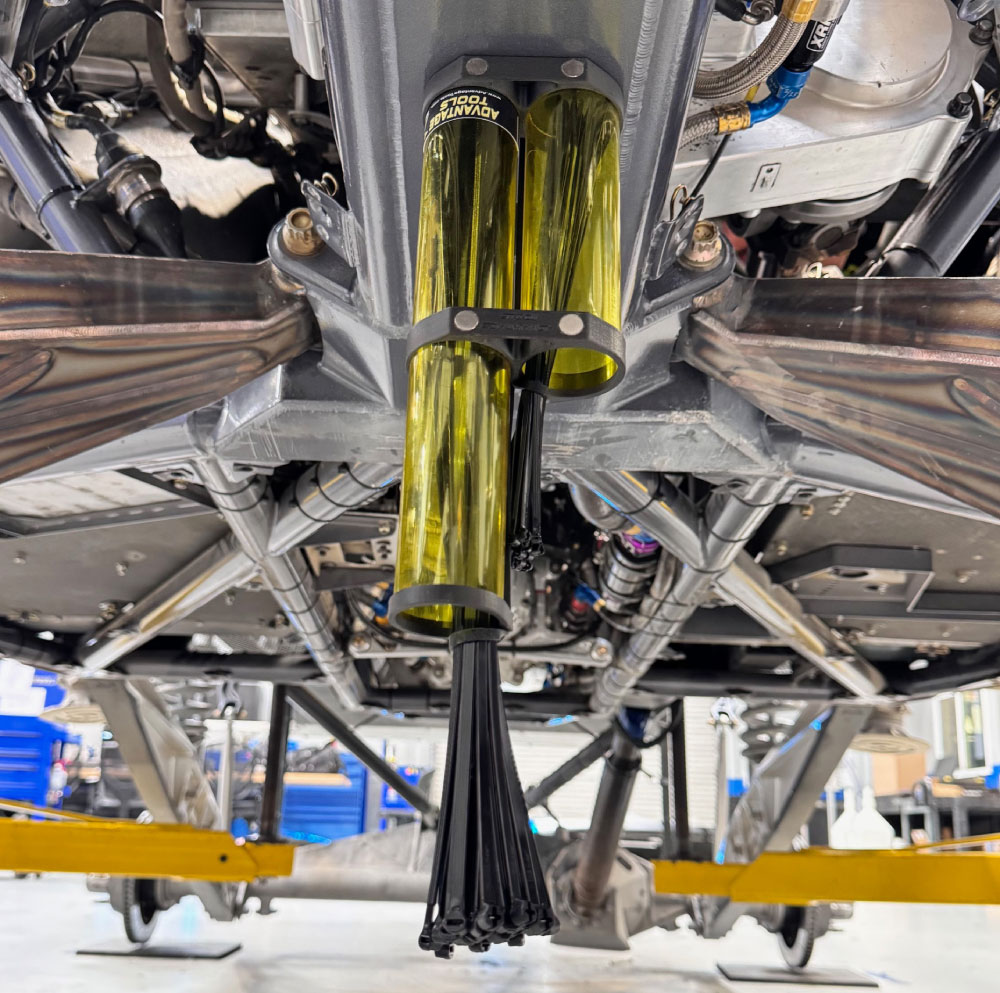
Secure retention in any orientation—even upside down
Easy to reload
Durable enough for real shop use
Built to match the level of tools already in a professional shop
Why Magnetic Changes Everything
In a steel tube chassis, magnets change the game completely.
Now, instead of finding a place to set something down, the entire chassis becomes your mounting surface.
There’s always a place to put it. Always somewhere within reach. Always positioned exactly where you’re working.
You’re not walking back to a cart. You’re not setting things on the ground. You’re not losing tools.
It stays with you.
That alone makes the workflow faster and a lot less frustrating.
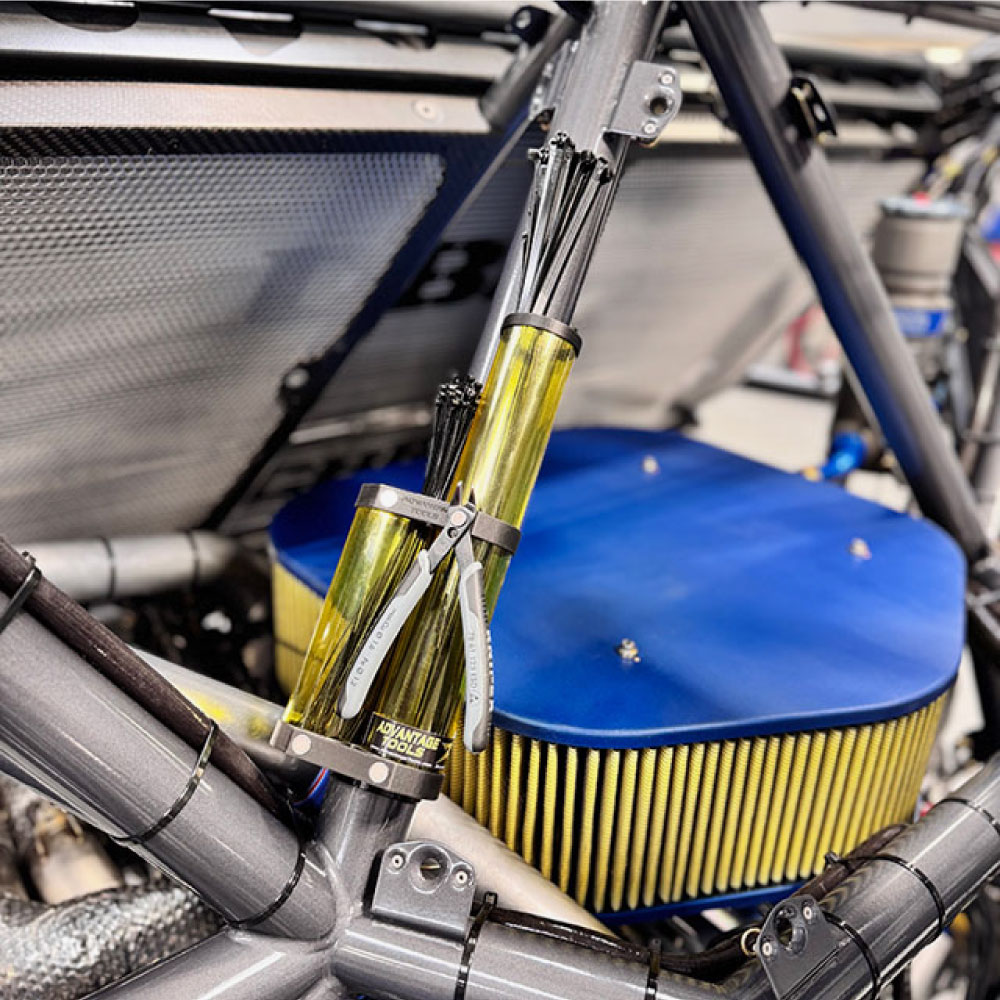
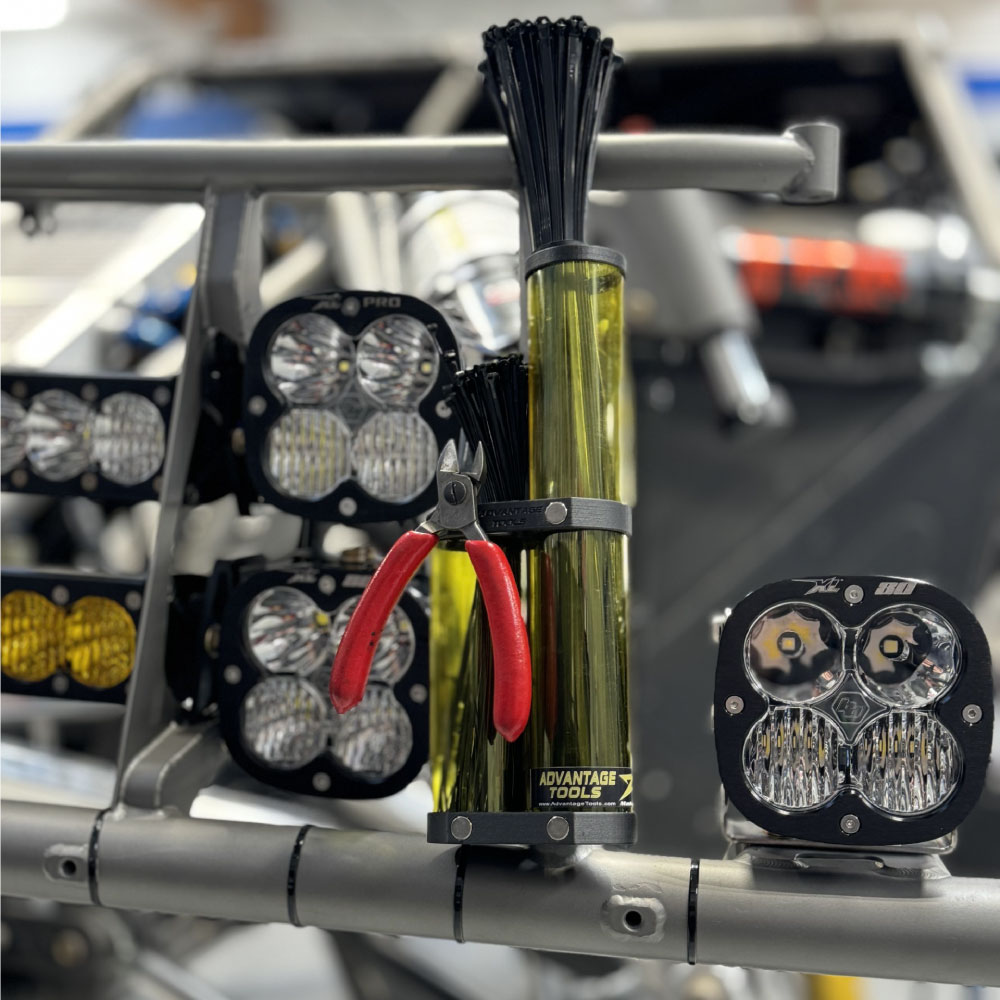
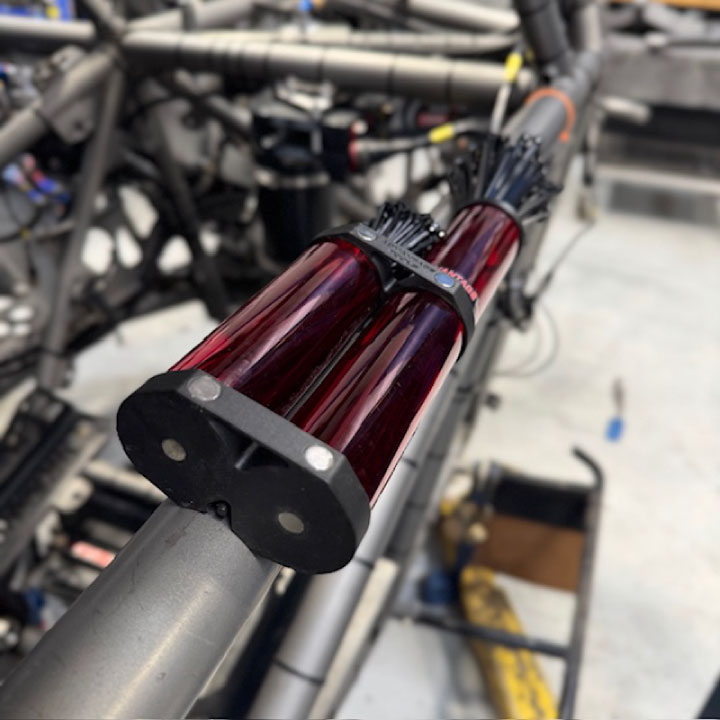
Zip Tie Holder mounted directly to chassis tubing—with cutters always within reach.
Built for Tube Chassis from the Start
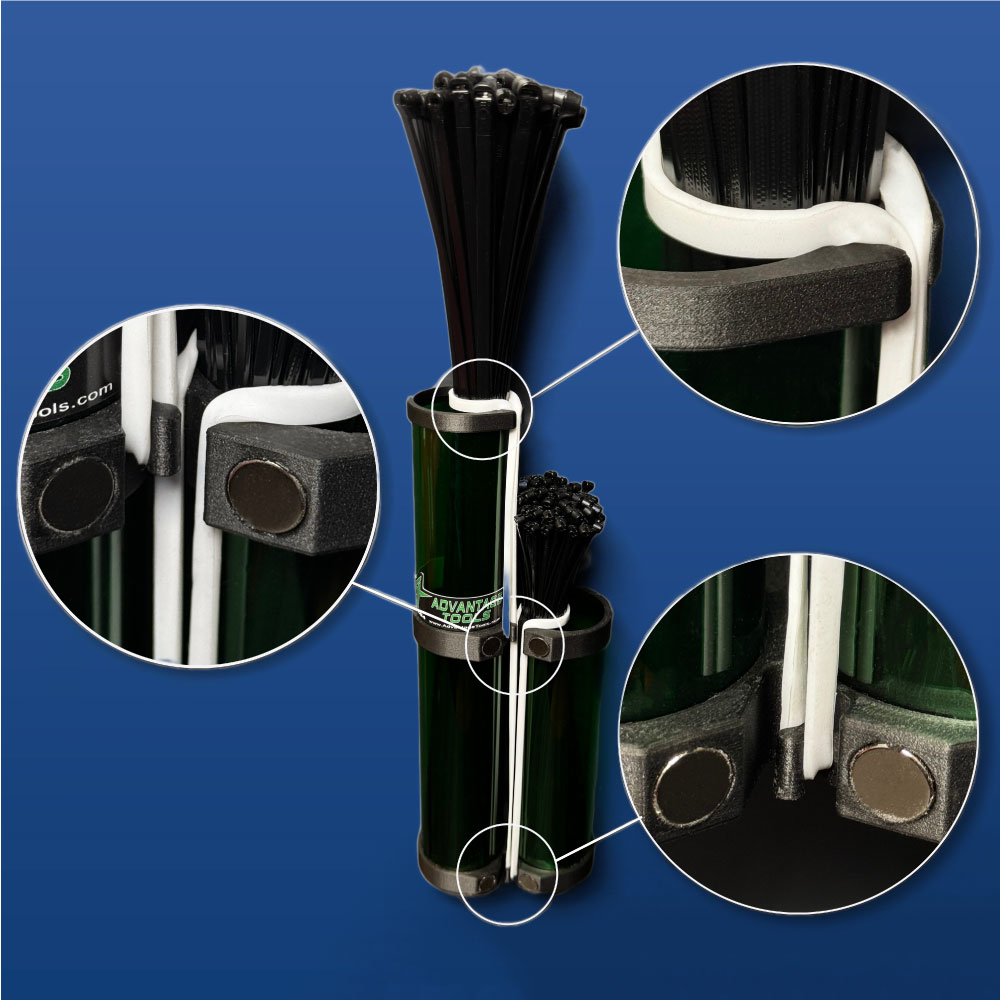
One of the key features from the very first design was the magnetic V-block.
That came directly from working in tube chassis.
Flat magnetic surfaces are useful—but in a race truck, most of your structure is round tube. If it can’t mount there, it’s limited.
The V-block makes the entire chassis usable as a mounting point. Not just the occasional flat plate—everywhere.
That was non-negotiable from the beginning.
Iterating Until It Was Righ
The first version worked—but it wasn’t even close to finished.
There were a lot of iterations to get everything right.
Retention System
The band system went through multiple redesigns.
The routing changed. The hook and groove system evolved. The goal was to balance two things:
strong enough to hold zip ties in any position
easy enough to reload without fighting it
That balance took time to get right.
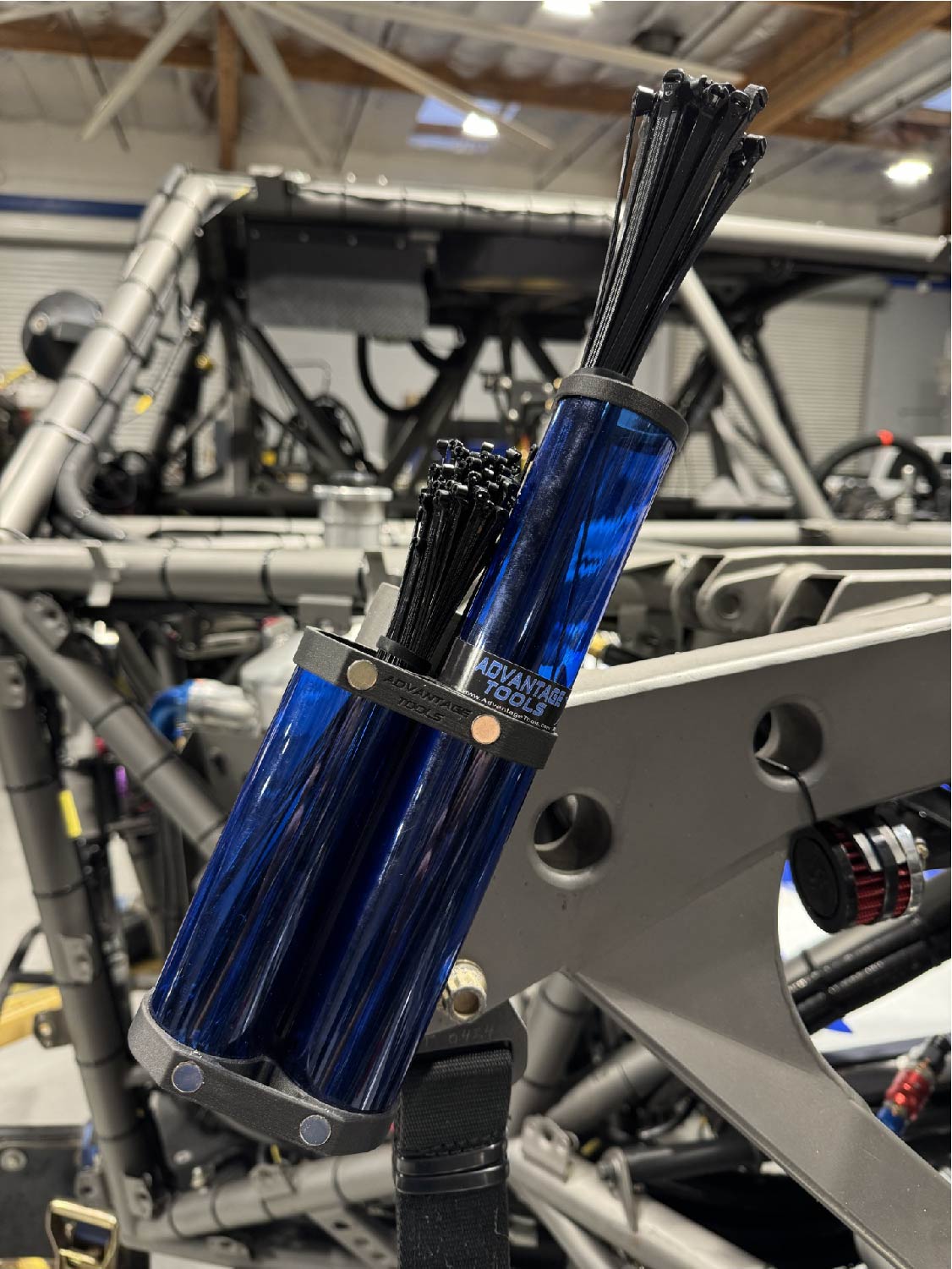
Band-in-groove system—this took multiple iterations to get right.
Materials
Different materials were tested across the board.
Bands: Rubber → Nitrile → Silicone Early materials would dry rot or lose elasticity. Silicone proved to be the most reliable.
Body: PETG → ABS → CF-Nylon Each step improved durability and heat resistance until landing on a material that could handle real shop conditions.
Geometry and Fit
Tube lengths and heights were adjusted to dial in the right band tension.
Too loose, and zip ties fall out. Too tight, and reloading becomes a pain.
That geometry changed more than once before it felt right.
Magnets
Magnet size and strength were refined to get the balance right.
The final setup uses N52 neodymium magnets—strong enough to stay put, without adding unnecessary bulk.
Proven in the Shop Before It Ever Went for Sale
This wasn’t something that went straight from prototype to market.
It lived in the shop at McMillin Racing for over two years.
Used daily. Iterated constantly. Handed to other professionals along the way.
The feedback was consistent early on—“game changer.”
That’s when I knew it was worth taking further.
It wasn’t rushed. It was built, tested, and refined in the same environment it was designed for.
The Feature That Became a Staple
One thing that wasn’t originally the focus—but quickly became essential—was using the magnets to hold flush cuts.
At first, it was just a convenience.
Now it’s one of the most useful parts of the whole setup.
No more setting cutters down somewhere random. No more searching for them.
They’re always right there with the zip ties.
Cutters always within reach—no more digging around for them.
It Works in Any Position
In a race truck, nothing is at a perfect angle.
So it has to work:
upright
sideways
upside down
The retention system was designed around that.
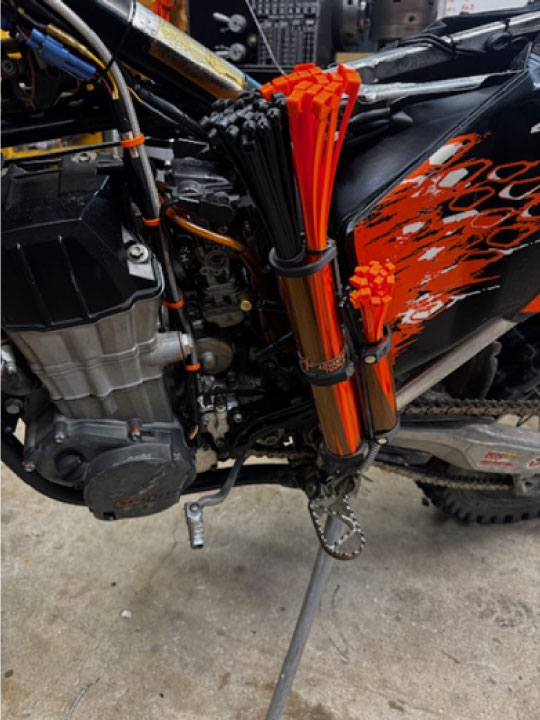
Holds in any position—even upside down.
Where It Fits
This isn’t a gimmick tool.
It was built to match the level of everything else in a professional shop.
Whether it’s:
sitting on a high-end toolbox
mounted inside a chase truck
used during prep on a race truck
or part of a full shop workflow
It fits right in—because that’s where it came from.
The Original Problem, Solved
At the end of the day, the goal was simple:
Stop wasting time dealing with zip ties.
No more:
mouth full of zip ties
climbing in and out of the truck constantly
dropping them all over the floor
losing track of cutters
Just everything you need, exactly where you’re working.